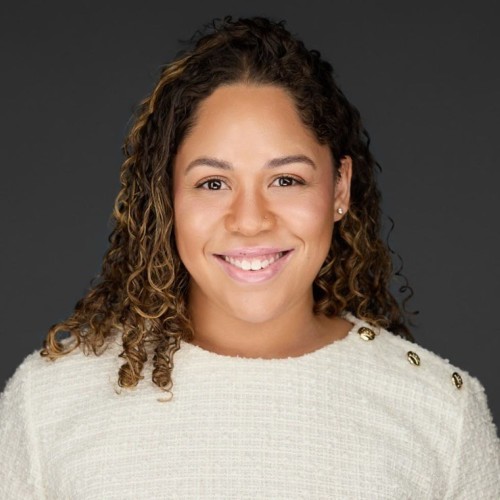
Autumn Kariuki, RN
Compared to broader degrees such as an MBA or MPH, Dartmouth’s MHA offered more targeted preparation for executive and operational roles within healthcare, aligning closely with my career trajectory.
Originally from the East Coast, I now call California home, thanks to my journey as a travel nurse. I began my nursing career at Yale New Haven Hospital in Connecticut, where I worked in their Level 1 trauma center Emergency Department. During the COVID pandemic, I began working as a travel nurse across California, eventually settling in Southern California after about two years. I currently serve as a Nursing Director for an Emergency Department at a community hospital. With a wealth of experience in emergency, trauma, and critical care nursing, I have focused on driving clinical excellence, improving operational efficiency, and fostering staff development in high-acuity settings.
What drew you to pursue an MHA degree?
I was driven by a desire to expand my impact beyond clinical care and contribute on a broader level. Through my experience, I recognized the critical need for strong, informed leadership to navigate the complexities of healthcare delivery, improve system efficiency, and drive patient-centered outcomes. Pursuing an MHA degree offers the knowledge and skills necessary to influence policy, manage resources effectively, and lead organizational change, aligning with my long-term goal of shaping the future of healthcare at a broader, systems-level.
Why Dartmouth?
Dartmouth’s MHA program stood out to me because of its rigorous, real-world preparation for health system leadership, paired with a strong commitment to equity and population health. I also had prior ties to the Upper Valley, which gave me meaningful exposure to the Dartmouth Health system and reinforced my interest in an environment where academic training is closely integrated with operational practice.
Compared to broader degrees such as an MBA or MPH, Dartmouth’s MHA offered more targeted preparation for executive and operational roles within healthcare, aligning closely with my career trajectory. In addition, the program’s hybrid model provided a level of flexibility that was more supportive of my full-time leadership responsibilities than more local, California-based options, without sacrificing academic rigor. Dartmouth’s reputation for excellence, combined with its tight-knit and highly engaged alumni network, ultimately made it the strongest fit for my professional goals.
What has been the best part of the program for you – so far?
The best part of the MHA program so far has been the opportunity to apply rigorous, real-world operational analysis directly to complex health systems challenges. A standout example was the Narayana Health operational analysis, which required a deep dive into cost structures, throughput, scale, and quality outcomes in a high-volume, resource-constrained environment.
That case pushed me to think differently about efficiency, standardization, and access while balancing clinical quality; insights that are directly relevant to my current leadership role.
More broadly, the program’s applied coursework in accounting and health systems has strengthened my ability to analyze offering margins, evaluate operational trade-offs, and communicate decisions clearly with executive and clinical stakeholders. Connecting with my peers during the in-person residentials is an added benefit. These sessions allow us to share perspectives from our diverse backgrounds, collaborate on our current roles, and brainstorm new business ideas, which strengthens a close-knit and highly engaged professional network.
What are your career goals post-MHA?
Post-MHA, my career goals include transitioning into an executive leadership role, such as Chief Operating Officer (COO), or launching my own health advocacy business focused on improving access and outcomes for underserved populations. Both paths reflect my desire to lead with purpose, turn ideas into meaningful action, and improve healthcare systems in ways that genuinely serve people. As a nurse leader, I recognize that clinical expertise alone is not sufficient to drive sustainable change within today’s complex healthcare systems. The MHA provides critical business, financial, operational, and strategic leadership skills that empower nurse leaders to influence decision-making at the executive level. Understanding healthcare finance, policy, quality improvement, and organizational leadership allows nurse leaders to bridge the gap between patient care and system-level management. These competencies are essential not only for advancing into roles like COO, where operational efficiency and strategic oversight are key, but also for building and sustaining a mission-driven advocacy business that addresses health disparities. The MHA equips nurse leaders to lead with both compassion and competence, ensuring high-quality, equitable care while maintaining organizational sustainability.
In parallel, I hope to engage in healthcare advocacy and large-scale consulting work that extends beyond a single organization, supporting health systems, communities, and policymakers in improving access, quality, and efficiency of care. Over time, I also want to contribute through board service, mentoring future healthcare leaders, and advising organizations on ethical, data-driven transformation. Ultimately, my goal is to help build resilient health systems that balance operational excellence with compassion, equity, and long-term public impact.