Isabella Martingano
I’ve become increasingly aware that clinical knowledge alone is not enough to navigate today’s healthcare system. I’ve seen how decisions about resource allocation, operations, and policy can directly affect both patient outcomes and provider experiences. I chose to pursue an MHA because I want to understand the structures behind care delivery and be equipped to influence them.
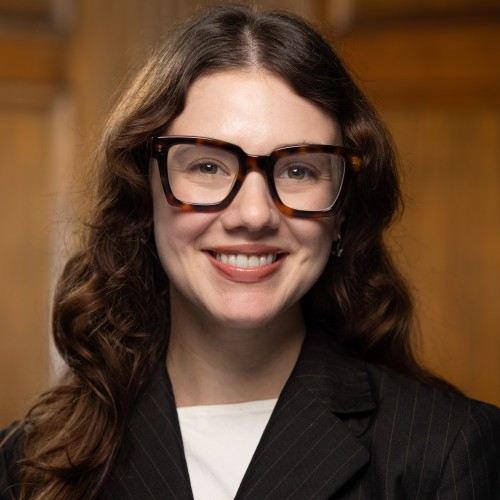
I’m Isabella Martingano, a fourth-year medical student at the Tilman J. Fertitta Family College of Medicine at the University of Houston. I’m currently taking a gap year to pursue this degree and participate in clinical research. During medical school, I served as Student Council President, leading initiatives centered on student wellness and institutional transparency. I’m applying into anesthesiology and have a strong interest in how operational decisions shape care delivery at every level. I’m passionate about health equity, interdisciplinary teamwork, and reimagining systems to better support both patients and providers.
What drew you to pursue an MHA degree?
As I approach the end of my medical training, I’ve become increasingly aware that clinical knowledge alone is not enough to navigate today’s healthcare system. I’ve seen how decisions about resource allocation, operations, and policy can directly affect both patient outcomes and provider experiences. I chose to pursue an MHA because I want to understand the structures behind care delivery and be equipped to influence them. My goal is to become a physician who not only treats individual patients but also helps build systems that are more efficient, equitable, and supportive for everyone involved.
Why Dartmouth?
What initially drew me to Dartmouth’s MHA program was its unique partnership between the Tuck School of Business and the Geisel School of Medicine. I was specifically looking for a program that would allow me to engage deeply with both clinical and business faculty, and Dartmouth offers that integration at an exceptionally high level.
I considered multiple pathways and applied to MHA and MBA programs. Ultimately, I chose the MHA because my career is firmly rooted in healthcare, and I wanted training that was purpose-built for that space rather than broadly transferable. My husband, who completed his MBA prior to starting medical school, encouraged me to pursue the MHA for that reason—and it has proven to be exactly the right decision.
What has been the best part of the program for you – so far?
There have been a lot of highlights in the MHA program so far, from the well-designed residential sessions to the really thoughtful guest lectures. One experience that stood out most to me was the operations management course taught by Nicole DeHoratius. She pushed us to think differently about healthcare operations, challenge assumptions we often take for granted, and aim for true operational excellence. It changed the way I think about problem-solving in complex systems and has been one of my favorite parts of the program so far.
What have you learned so far that you think will strengthen your career as a future physician?
Up until now, my training has been entirely science based, from organic chemistry and human anatomy to medical humanities. I had no formal leadership education and nothing remotely related to running a business. The MHA program has filled that gap. I learned that healthcare does not exist in an economic vacuum and that even the smallest clinical decisions have downstream effects on patients, teams, and the system as a whole.
Healthcare is a business, whether we like it or not, and now more than ever it requires leaders who deeply understand and respect both the clinical and operational sides.
The MHA program has pushed me to think beyond individual patient encounters and develop a true systems level mindset. It has reshaped how I frame problems, evaluate tradeoffs, and define high quality care. Just as importantly, it has been energizing and has given me the space to question how healthcare works today and imagine how it could work better before I even begin residency training.
What are your career goals post-MHA?
I am applying to the 2027 residency match cycle and plan to pursue training in anesthesiology. Anesthesiologists often serve as clinical and operational leaders, and I am excited to use the skills I’ve gained through the MHA to step into those roles.
Long term, I hope to build a career in academic medicine, where I can work closely with trainees while also pushing for meaningful change in healthcare. I aspire to step into hospital and health system leadership at a large organization. I am on a personal mission to solve how healthcare systems can deliver high quality care to the patients who need it most while remaining financially sustainable. I want to spend my career working at the intersection of clinical care, and operations to help prove that serving the most vulnerable populations and maintaining strong margins are not mutually exclusive.
Is there anything else that you would tell a friend or colleague who was considering Dartmouth’s MHA program?
Do it. You will not regret it. Dartmouth’s MHA program is challenging in the best way. It makes learning feel fun again while surrounding you with thoughtful, driven peers.